Author Archives: Michelle Mech

Sperm Whales Found Full of Car Parts and Plastics
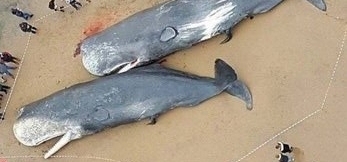
Fishing gear and an engine cover are just some of the startling contents found inside the stomachs of sperm whales that recently beached themselves on Germany’s North Sea coast.

The 13 sperm whales washed up near the German state of Schleswig-Holstein earlier this year, the latest in a series of whale strandings around the North Sea. So far, more than 30 sperm whales have been found beached since the start of the year in the U.K., the Netherlands, France, Denmark, and Germany.

After a necropsy of the whales in Germany, researchers found that four of the giant marine animals had large amounts of plastic waste in their stomachs. The garbage included a nearly 43-foot-long (13-meter-long) shrimp fishing net, a plastic car engine cover, and the remains of a plastic bucket, according to a press release from Wadden Sea National Park in Schleswig-Holstein.

However, “the marine litter did not directly cause the stranding,” says Ursula Siebert, head of the Institute for Terrestrial and Aquatic Wildlife Research at the University of Veterinary Medicine Hannover, whose team examined the sperm whales.

Instead, the researchers suspect that the whales died because the animals accidentally ventured into shallow seas.
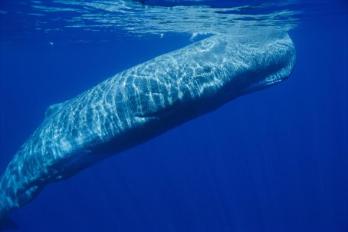
Sperm whale swims near the Azores in the Atlantic Ocean. Photography by Brian Skerry, National Geographic Creative

. . . According to the WDC, whales and dolphins may strand for many reasons, such as excessive noise pollution from ships and drilling surveys or even subtle shifts in Earth’s magnetic field. In addition, pilot whales that beached off the coast of Scotland three years ago showed high levels of toxins from ocean pollution, which scientists linked to stress on their brains that may have caused disorientation.
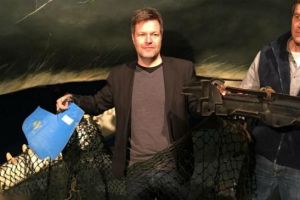
Schleswig-Holstein environment minister Robert Habeck holds debris found inside beached sperm whales in a picture posted to Instagram.  (Photo Robert Habeck,Instagram)

. . . Siebert adds that if the whales had survived, the garbage in their guts might have caused digestive problems down the line. At the time of death, the animals were in decent shape and, in addition to the debris, the scientists found thousands of squid beaks in the whales’ stomachs.

But when whales and dolphins ingest lots of marine litter, either accidentally or because they mistake the trash for prey, it can cause physical damage to their digestive systems. The trash may eventually give the animals the sensation of being full and reduce their instinct to feed, leading to malnutrition.

While the garbage may not have been lethal for these whales, “the plastic debris in their stomachs is a horrible indictment of humans,” adds Hal Whitehead, a whale researcher at Dalhousie University in Nova Scotia, Canada.

READ FULL ARTICLE AT:

Sperm Whales Found Full of Car Parts and Plastic

Melaque mayors take actions to reduce plastic going into the ocean

The current and former mayors of Melaque, Jalisco, Mexico: Rosa Evelia Vidrio and Adrián Herrera Álvarez.

Following a presentation to local government officials in 2014 about the impacts of plastic debris, the then mayor of Melaque, Adrián Herrera Álvarez, undertook several initiatives to reduce the amount of plastic going into the oceans from litter on the Melaque beach. These included: placing garbage cans at the end of every street that abuts the beach, increasing the number of recyling collection sites in the town, sending notices to owners of restaurant and residential homes and businesses to remind them that they are legally responsible for cleaning the beaches all the way to the water line (most cleanup was only being done in front of their establishments), holding events to raise awareness about the plastic in the oceans, and beach cleanups.

This has resulted in a very substantial decrease in the amount of plastic on Melaque’s beach and thus the amount going into the ocean.  However, this situation changes dramatically when tourists from other parts of Mexico come to Melaque for holidays such as Easter, Christmas, and holiday weekends.  During that time a significant amount of plastic debris is littered along or near the waterline.  Therefore, much more needs to be done to eradicate plastic debris.

The new mayor of Melaque, Rosa Evelia Vidrio, who started her three year term in March, 2016, is enthusiastic about continuing to improve the plastic debris situation in Melaque.

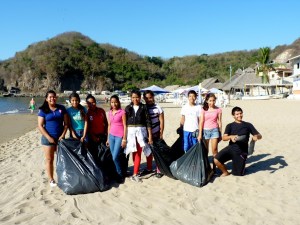
p1100877rbeach-cleanup-r

Marine animals worldwide are ingesting plastic

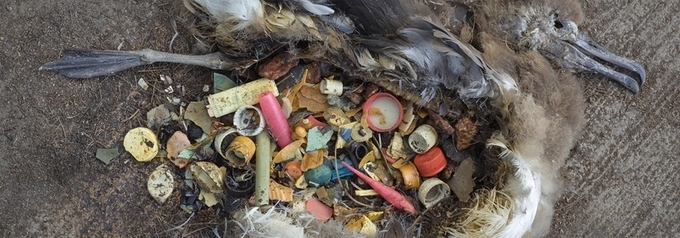
Laysan Albatross fledgling, dead from ingesting plastic – Midway Atoll. [Photo: Chris Jordan]  Marine animals often cannot distinguish plastic from food and mistakenly ingest it. “Every creature in the ocean food chain, from the tiniest plankton to the largest whales, is consuming plastic.”  Capt. Charles Moore  

Albatross2 Chris JordanAlbatross Chris Jordan

Ingestion of plastic by marine animals is covered in the presentation:

MARINE POLLUTION – THE IMPACTS OF PLASTIC DEBRIS – 170316

All PDFs of the PowerPoint presentations are available under “Educational Material”.

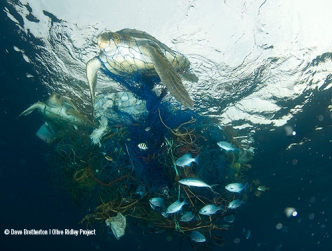
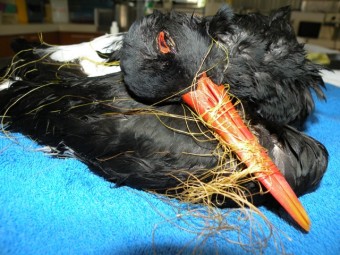
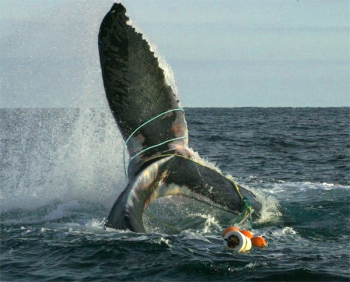
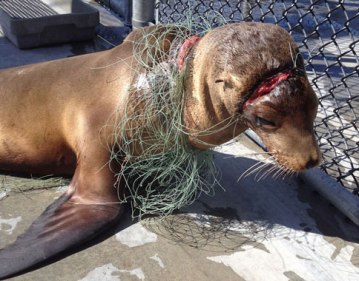
A large percentage of marine animals that are entangled in plastic find it impossible to escape and do not survive.

Sea turtle entangled in abandoned or lost fishing gear. [Photo courtesy Ocean Conservancy]

Abandoned and lost fishing gear like nets, fishing line and buoys have been found to pose the greatest overall threat of entanglement to marine wildlife.

ghost-net-turtles-entangledentanglement-greensea-turtle-tangled-net_noaa_720-the-noaa-marine-debris-program-funds-projectsentanglement-this-critically-endangered-pied-oyster-catcher-was-found-by-asr-volunteers-in-2010-entangled-in-fishing-line-on-ballina-beach-photo-australian-seabird-rescueghost net dolphinentanglement-humpback_whale_entangled_provincetown_center_coastal_studies-off-the-canadian-coast-in-the-north-atlantic-pccsnoaa-permit-932-1905-2entangled-sea-lion-pup-was-entangled-in-fishing-line-when-he-was-rescued-courtesy-marine-mammal-centre

Entanglement of marine animals in plastic debris is covered in the presentation:

MARINE POLLUTION – THE IMPACTS OF PLASTIC DEBRIS – 170316

All PDFs of the Oceans PowerPoint presentations are available under “Educational Material”.

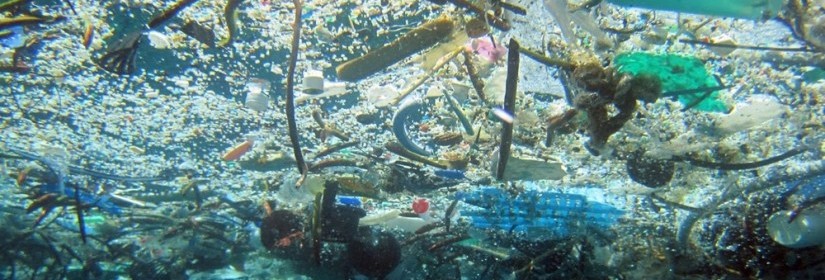
Plastic debris is everywhere in the marine environment.

Plastic in the oceans now ranks as one of the biggest threats facing our planet.
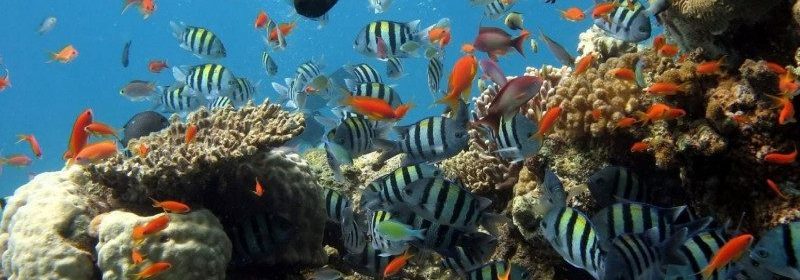
Plastic does not biodegrade on any practical time scale. Instead plastic photodegrades, breaking down to smaller and smaller pieces, all of which are still plastic polymers.
“Except for a small amount that’s been incinerated, every bit of plastic manufactured in the world for the last 50 years or so still remains. It’s somewhere in the environment.” Anthony Andrady, senior research scientist

Marine debris North America, touched landscape Photo source photobucket

The extent and impacts of plastic debris in the oceans are covered in the presentation:

MARINE POLLUTION – THE IMPACTS OF PLASTIC DEBRIS – 170316

All PDFs of the Oceans PowerPoint presentations are available under “Educational Material”.

Marine pollution is impacting the health and survival of marine animals

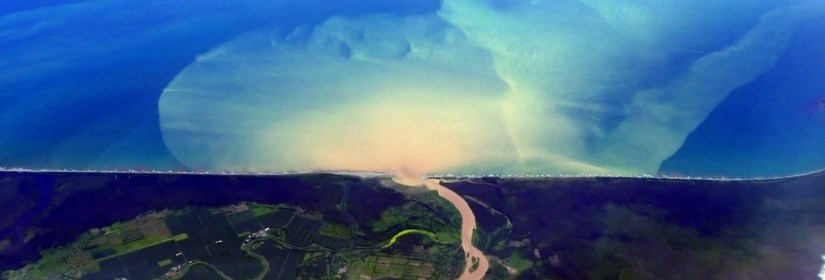
Runoff – After a rainstorm, a river on the Meso-American coast discharges sediment and nutrient-laden water (fertilizer and other possible contaminents) to the Caribbean sea. [Photo: Malik Naumann, Marine Photobank] Almost 80% of marine pollution comes from land-based activities worldwide: industry, agriculture, or domestic.

For years, people have been treating the oceans like giant garbage dumps. They have assumed that the oceans are so large that all pollutants would be diluted to safe levels and not harm the ecosystem.  In reality they have not disappeared and some toxic man-made chemicals have even become more concentrated as they have entered the food chain.

marine-pollution-sewage-pipe-draining-in-ocean-in-lamarine-pollution-oilmarine-pollution-air-before-flue-gas-desulfurization-was-installed-the-emissions-from-this-power-plant-in-new-mexico-contained-excessive-amounts-of-sulfur-dioxide-courtesy-newworldencyclopedia-or

Birds have played a major role in creating awareness of pollution problems.  For example, populations of bald eagles were decimated following World War II, when DDT was widely used as a pesticide.

DDT  washed into nearby waterways, where aquatic plants and fish absorbed it.  Bald eagles and other predatory birds such as Ospreys, Peregrine Falcons, and Pelicans, in turn, were poisoned with DDT when they ate the contaminated fish and the DDT and its relative toxins bioaccumulated in their fatty tissues.  The chemical interfered with the ability of the birds to produce strong eggshells. As a result, their eggs had shells so thin that they often broke during incubation or otherwise failed to hatch.  With the banning of DDT in the 1970s and 1980s, Bald Eagle and other predatory bird populations have recovered significantly.

P1260696 - croppedMarine Pollution - DDT, Eagle eggs

Pollution from toxic chemicals is covered in the presentation:

MARINE POLLUTION – TOXIC WASTE – 170126

All presentation PowerPoint files in English are available under “Educational Material”

Man-made ocean noise is stressing and killing marine life

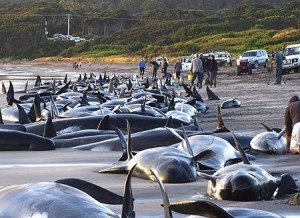
Some man-made ocean noises are causing whales and other marine animals to beach themselves.

The human-caused noise that is now in our oceans poses a significant and sometimes lethal threat to whales, dolphins, seal lions, seals, sea turtles, and other marine wildlife.  For example, in whales and dolphins, low frequency military active sonar (LFA) is causing tissue damage and bleeding around the ears, eyes, and brain, and large bubbles or holes in their organs – the result of decompression sickness, caused when the animals are frightened by the intense noise of LFA and surface too quickly.

Sonar results - dolphinSonar - striped dolphins beached - look at the blood in the water - Iranwhales-beached_in_tasmania


Noise and light pollution is covered in the presentation:

MARINE POLLUTION – MAN-MADE NOISE AND LIGHT – 170126

All PDFs of the Oceans PowerPoint presentations are available under “Educational Material”.

Unsustainable fishing practices are decimating fish populations and destroying marine habitats

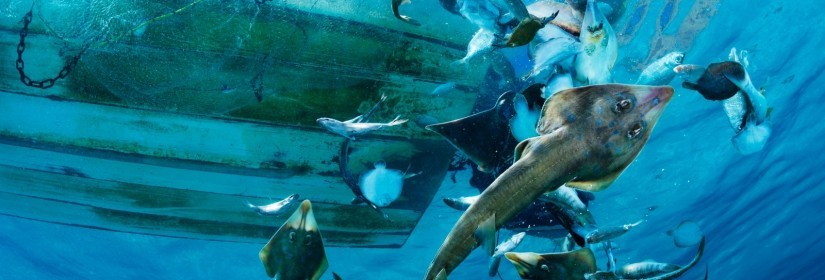
Guitarfish, rays, and other bycatch are thrown overboard as waste off a boat near La Paz, Mexico.[Photo: Brian J. Skerry/Natl Geographic]

Overfishing is causing imbalances in ocean ecosystems and having devastating effects on both the fish targeted and virtually all other marine creatures.  85% of the world’s fisheries are fully to over-exploited, depleted, or in a state of collapse and 90% of the populations of large, predatory fish have already been fished out.

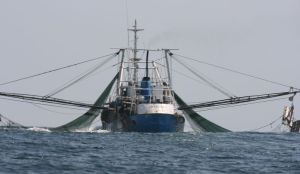
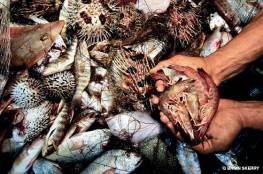
fishing-vessel-trawler-by-science-for-environment-policybycatch-a-fisherman-holds-the-shrimp-he-caught-in-his-bottom-trawl-net-after-towing-it-for-an-hour-the-other-dead-animals-are-bycatch-thrown-back-into-the-sea-as-trash-brian-skerryshark-finning-agence-france-presse-getty-images-shark-fins-drying-in-the-sun-cover-the-roof-of-a-factory-building-in-hong-kong-on-january-2013

Unsustainable fishing, including bycatch and shark finning, and the results of overfishing are included in the presentation:

OVERFISHING – 170120

All PDFs of the Oceans PowerPoint presentations are available under “Educational Material”

Climate change is causing ocean acidification and warming

Ocean acidification is threatening the life of many marine organisms, including crustaceans, mollusks, and coral reefs.

The oceans have absorbed 80% of all excess heat in the Earth’s system and about one-third of the carbon emissions released by humans over the past 200 years.  This is causing:

  • Ocean warming, which is threatening coral, phytoplankton, and other marine life and is creating regions with levels of oxygen too low to sustain marine life.
  • Changes in the ocean chemisty, referred to as ocean acidification, which can make it difficult for many marine animals to grow, build shells, reproduce and respond to other stresses.

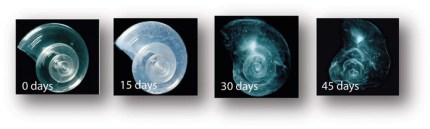
The pteropod, or “sea butterfly”, is a tiny sea creature about the size of a small pea. Pteropods are eaten by organisms ranging in size from tiny krill to whales and are a major food source for North Pacific juvenile salmon. The photos below show what happens to a pteropod’s shell when placed in sea water with pH and carbonate levels projected for the year 2100. The shell slowly dissolves after 45 days.  Photo credit: David Liittschwager/National Geographic Stock. Used with permission. All rights reserved. National Geographic Images.

Acidification-pteropodpics1_med

The CLIMATE CHANGE presentation provides an understanding of the major impacts of climate change on our oceans and also on the rest of the planet.

CLIMATE CHANGE – IMPACTS ON OUR OCEANS AND LAND – 170201

All PDFs of the Oceans PowerPoint presentations are available under “Educational Material”.


RELATED ARTICLES:

« Older Entries Recent Entries »