Author Archives: Michelle Mech

Global Warming Clobbers Ocean Life
The waters of the Pacific off the California coast are transparently clear. Problem is: Clear water is a sign that the ocean is turning into desert (Source: National Oceanic and Atmospheric Administration, NOAA).

From Alaska to Central America, and beyond, sea life has been devastated over the past three years like never before. . . scientists refer to the lethal ocean warming over the past few years as “the Warm Blob.”

After all, global warming hits the ocean much, much harder than land. Up to 90% of anthropogenic (human-caused) global warming is absorbed by the ocean, which is fortuitous for humans.

“Upper ocean heat content has increased significantly over the past two decades” (Source: Climate Change: Ocean Heat Content, NOAA, Climate.gov, July 14, 2015). More than 3,000 Argo floats strategically positioned worldwide measure ocean temps every 10 days.

Scientists classify the Warm Blob phenomenon as “multi-year ocean heat waves,” with temperatures 7° F above normal and up to 10°F above normal in extreme cases. How would humans handle temperatures, on average, 7° to 10°F above normal? There’d be mass migrations from Florida to Alaska, for sure. As it happens, sea animals do not do well. They die in unbelievably massive numbers; all across the ocean… the animal die-offs are unprecedented. Scientists are stunned!

After years of horrendous worldwide sea animal die-offs, 2016 was a banner year. Is this out of the ordinary? Sadly, the answer is: Yes.

The numbers are simply staggering, not just in the Pacific, but around the world, e.g., the following is but a partial list during only one month (December 2016): Tens of thousands of dead starfish beached in Netherlands; 6,000 dead fish in Maryland waterway; 10 tons of dead fish in Brazilian river; tens of thousands of dead fish wash up on Cornwall, England beach; schools of dead herring in Nova Scotia; 100 tons of fish suddenly dead in Indonesia; massive fish deaths ‘state of calamity’ in Philippines; thousands of dead crayfish float down river in New Zealand; masses of dead starfish, crabs, and fish wash ashore in Nova Scotia, and there are more and more….

In fact, entire articles are written about specific areas of massive die offs, for example: “Why Are Chilean Beaches Covered With Dead Animals?” Smithsonian.com, May 4, 2016. Chilean health officials had to resort to heavy machinery to remove 10,000 dead rotting squid from coastlines earlier in the 2016 year. Over 300 whale carcasses hit the beaches and 8,000 tons of sardines and 12% of the annual salmon catch… all found dead on beaches, to name only a few! You’ve gotta wonder why?

According to Nate Mantua, research scientist at the National Oceanic and Atmospheric Administration’s Southwest Fisheries Science Center in Santa Cruz, California: “One of the things that is clear is there’s a lot of variation from year to year along the Pacific Coast, and some of that is tied into natural patterns, like El Niño,’ Mantua said. ‘But what we saw in 2014, ‘15 and the first part of ‘16 was warmer than anything we’ve seen in our historical records, going back about 100 years” (Mary Callahan, Year in Review: Ocean Changes Upend North Coast Fisheries, The Press Democrat, Dec. 25, 2016).

climate-change-photo-nasa-kathryn-hansen2

 Photo: NASA/Kathryn Hansen 

. . . Morosely, too-warm ocean water serves as breeding ground for the infamous deadly “red tide,” a bloom of single-celled organism that thrives in warmer waters, producing a neurotoxin called domoic acid, resulting in enormous numbers of sea lion fatalities and massive destruction of Dungeness crab fisheries and all kinds of other trouble.

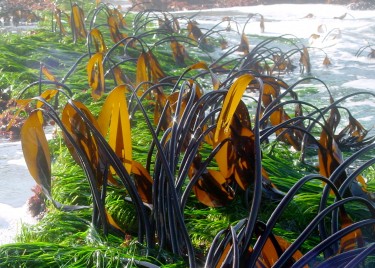
Too-warm water also contributes to the collapse of bull kelp forests, which are the ocean’s equivalent of the tropical rain forest; meanwhile, purple urchins thrive and multiply in explosive fashion in the poisonous environment, devouring remaining plant life. Thereby, out-competing hapless red abalone, the shellfish that people love.

Collapsing food chains are evident up and down the Pacific Coast earmarked by large die offs of Cassin Auklets, a tiny seabird, as well as massive numbers of Common Murres. The sea lions and fur seals suffer from starvation and domoic acid poisoning. In early 2013 scientists declared the sea lion die-off an “unusual mortality event.”

Nursing sea lion mothers are unable to find enough forage like sardines and anchovies.

. . . Bottom line, the ecosystem is under fierce attack, and it is real, very real indeed with too much global warming, too much ag runoff, too much heavy-duty massive overfishing, likely too much nuclear radiation, and deadly acidification caused by excessive CO2 concentrations (already damaging pteropods at the base of the marine food chain) as the ocean absorbs anthropogenic CO2 emissions from fossil fuels, similar to the upper atmospheric conundrum where 400+ ppm of CO2 (anything over 350 ppm leads to serious planetary trouble over time) is already heating up the planet as the ocean absorbs 90% of that heat.

READ FULL ARTICLE:

GLOBAL WARMING CLOBBERS OCEAN LIFE

by ROBERT HUNZIKER

JANUARY 16, 2017

http://www.counterpunch.org/2017/01/16/global-warming-clobbers-ocean-life/

Featured image photo credit: NASA/Kathryn Hansen

Pacific bluefin population is estimated to have plummeted by 97% from its historic high due to decades of overfishing.

Huge fish sells for 74m yen [$656,000 US, $850,000 CAD] as conservationists call for moratorium to help stabilise plunging Pacific stocks.

A bluefin tuna has fetched 74.2m yen (£517,000) at the first auction of the year at Tsukiji market in Tokyo, amid warnings that decades of overfishing by Japan and other countries is taking the species to the brink of extinction.

The 212kg fish, caught off the coast of Oma in northern Japan, was bought by Kiyomura, the operator of the Sushi Zanmai restaurant chain, after its president, Kiyoshi Kimura, outbid rivals for the sixth year in a row.

. . . Conservationists said the publicity surrounding the auction risked overshadowing the plight of the Pacific bluefin tuna. They have called for a two-year moratorium on fishing to rescue the Pacific bluefin population, which is estimated to have plummeted by 97% from its historic high due to decades of overfishing.

“People should be thinking about that when they see news about the auction,” Jamie Gibbon, officer for global tuna conservation at the Pew Charitable Trusts, told the Guardian.

Last month, 25 tuna-fishing nations plus the European Union agreed on the need for an urgent bluefin tuna recovery plan, but Japan is expected to resist drastic cuts in catch quotas or a moratorium to give stocks the opportunity to recover.

About 70% of Pacific bluefin are less than a year old when caught, according to Gibbon, and 95% are caught before they reach three years old – a practice that damages the species’ ability to reproduce.

The Western and Central Pacific Fisheries Commission tightened international limits in 2015 as the species remained under threat, halving the catch of bluefin tuna under 30 kilograms from the average caught between 2002 and 2004.

“If fishing continues at its current rate, then Pacific bluefin stocks will fall to levels that are commercially unsustainable, but Japanese officials continue to say that catch reductions will place too big a burden on fishermen,” Gibbon said. “Short-term profits are being put ahead of long-term conservation.”

About 80% of the global bluefin catch is consumed in Japan, where it is commonly served raw as sashimi and sushi. A piece of otoro – a fatty cut from the fish’s underbelly – can cost several thousand yen at high-end restaurants in Tokyo.

The global popularity of Japanese food is fueling an appetite for bluefin in other countries, including China.

READ FULL ARTICLE:

Bluefin tuna sells for £500,000 at Japan auction amid overfishing concerns

Justin McCurry in Tokyo

5 January 2017

https://www.theguardian.com/world/2017/jan/05/bluefin-tuna-sells-for-500000-at-japan-auction-amid-overfishing-concerns

Photo courtesty of The Guardian


Ocean acidification study offers warnings for marine life, habitats

Sea grass beds, like these off the coast of British Columbia, Canada, might buffer the impacts of ocean acidification.Christopher Harley,University of British Columbia

Acidification of the world’s oceans could drive a cascading loss of biodiversity in some marine habitats, according to research published Nov. 21 in Nature Climate Change.

The work by biodiversity researchers from the University of British Columbia, the University of Washington and colleagues in the U.S., Europe, Australia, Japan and China, combines dozens of existing studies to paint a more nuanced picture of the impact of ocean acidification.

While most research in the field focuses on the impact of ocean acidification on individual species, the new work predicts how acidification will affect the living habitats such as corals, seagrasses and kelp forests that form the homes of other ocean species.

“Not too surprisingly, species diversity in calcium carbonate-based habitats like coral reefs and mussel beds were projected to decline with increased ocean acidification,” said lead author Jennifer Sunday, a UBC zoologist and biodiversity researcher. Species that use calcium carbonate to build their shells and skeletons, like mussels and corals, are expected to be particularly vulnerable to acidification.

“The more complex responses are those of seagrass beds that are vital to many fisheries species. These showed the potential to increase the number of species they can support, but the real-world evidence so far shows that they’re not reaching this potential. This highlights a need to focus not only on individual species, but on how the supportive habitat that sets nature’s stage responds and interacts to climate change.”

. . .The researchers focused their study on the impact of ocean acidification on coral reefs, mussel beds, kelp forests and seagrass meadows that form the homes of thousands of marine species. They used observations of altered habitats around the world to project how changes in these habitats brought on by ocean acidification will impact the number of species that each habitat can support. . .

acidification-coral-ecosystems-like-these-pictured-off-the-coast-of-mexico-will-be-hit-hard-as-the-oceans-become-more-acidic-christopher-harleyuniversity-of-british-columbia

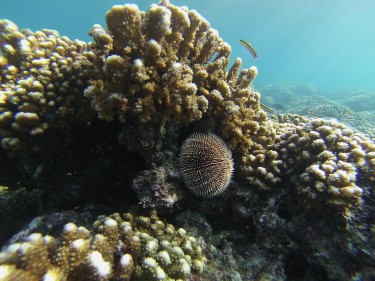
Coral ecosystems, like these pictured off the coast of Mexico, will be hit hard as the oceans become more acidic.Christopher Harley, University of British Columbia

READ FULL ARTICLE:

Ocean Acidification study offers warnings for marine life, habitats

November 21, 2016

http://www.washington.edu/news/2016/11/21/ocean-acidification-study-offers-warnings-for-marine-life-habitats/

See UBC news release.

THE OCEAN IS GIVING US 1.2 MILLION MT LESS OF FISH EVERY YEAR

Global marine fisheries catches have been declining, on average, by 1.2 million metric tons every year since 1996 and FAO knew very little about this.

Fortunately, the Global Atlas of Marine Fisheries has just been released and it explains, in detail and country-by-country, the reasons behind this unprecedented phenomenon, its consequences when it comes to food security and the steps that can be taken to ease the dire situation.

The 520-page book, published by Island Press, is the product of a 10-year research effort led by two renowned scientists from the Sea Around Us project at the University of British Columbia’s Institute for the Oceans and Fisheries: Dr. Daniel Pauly and Dr. Dirk Zeller, who were backed by close to 400 researchers from 273 countries.

Why wasn’t this issue reported before? Because for the past 50 years, member countries have been giving FAO misleading information regarding their fishery data. Thus, while the UN agency officially divulged a peak in global catches of 86 million metric tons by 1996, the real figure the UBC experts unearthed was of 130 million metric tons. Following that spike, numbers have been in sharp decline.

Countries’ inaccurate information is the result of unaccounted catches, such as those originating from recreational, artisanal, and illegal fishing, as well as from discarded bycatch.

One of the three chapters on Canada included in the Atlas reveals that Arctic catches, for example, are entirely missing from official reports. “These are almost exclusively subsistence for the local people,” Zeller explains. “So, what Canada is telling the world community is that no one is eating fish up there in the Arctic, which is simply wrong.”

The Atlas also shows the impact of discards in Canada’s fisheries data. “The northwest Atlantic was the area with the largest discards worldwide in the 1960s and 1970s,” Zeller says. The reasons for discarding were mostly getting ‘non-marketable animals’ and high grading, a ‘fish the best and leave the rest,’ -kind of practice.

Catches everywhere have been bountiful up until now, the Global Atlas of Marine Fisheries states. But the decline in volumes reveals that fish stocks are in danger. And climate change is only making things worse.

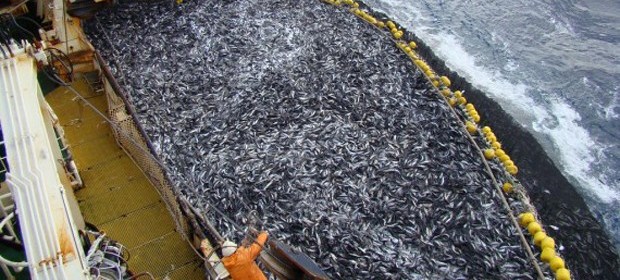
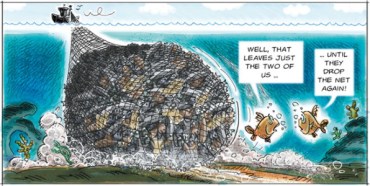
overfishing2

READ FULL ARTICLE:

SEA AROUND US’ NEW ATLAS REVEALS WHY THE OCEAN IS GIVING US 1.2 MILLION MT LESS OF FISH EVERY YEAR

November 3, 2016

http://www.seaaroundus.org/sea-around-us-new-atlas-reveals-why-the-ocean-is-giving-us-1-2-million-mt-less-of-fish-every-year/


World’s largest marine park created in Ross Sea in Antarctica

EU and 24 countries sign long-awaited agreement to protect 1.1m sq km of water in Southern Ocean, ensuring that fewer younger fish will be caught.

A landmark international agreement to create the world’s largest marine park in the Southern Ocean has been brokered in Australia, after five years of compromises and failed negotiations.

More than 1.5m sq km of the Ross Sea around Antarctica will be protected under the deal brokered between 24 countries and the European Union. It means 1.1m sq km of it – an area about the size of France and Spain combined – will be set aside as a no-take “general protection zone”, where no fishing will be allowed.

. . . It is the first marine park created in international waters and will set a precedent for further moves to help the world achieve the International Union for the Conservation of Nature’s recommendation that 30% of the world’s oceans be protected.

The Antarctic protections had been urgently sought because of the importance of the Southern Ocean to the world’s natural resources. For example, scientists have estimated that the Southern Ocean produces about three-quarters of the nutrients that sustain life in the rest of the world’s oceans. The region is also home to most of the world’s penguins and whales.

The Ross Sea is a deep bay in the Southern Ocean that many scientists consider to be the last intact marine ecosystem on Earth – a living laboratory ideally suited for investigating life in the Antarctic and how climate change is affecting the planet.

. . . The protections will not decrease the total amount of fish that are allowed to be caught in the Ross Sea, but it will move the industry away from the most crucial habitats close to the continent itself.

Russia has an industry catching antarctic toothfish there and the changes will push the fleet into waters where they will catch fewer immature fish, and where they won’t compete with as many orcas, who also rely on toothfish for food.

The agreement also establishes a large 322,000 sq km “krill research zone” that will allow for research catching of krill, but prohibit toothfish catching. Additionally, a 110,000 sq km “special research zone” will be established on the outside of the no-take zone, allowing catching of krill and toothfish only for research purposes.

. . . But the expiry of the protections in 35 years was a significant compromise. It came after five years of failed negotiations, with opposition from China and Russia which have fishing industries in the region.

READ FULL ARTICLE AT:

World’s largest marine park created in Ross Sea in Antartctica in landmark deal

By Michael Slezak

28 October 2016

https://www.theguardian.com/world/2016/oct/28/worlds-largest-marine-park-created-in-ross-sea-in-antarctica-in-landmark-deal


Why Global Warming Hits the Arctic Harder Than Anywhere Else

The melting of the sea ice has consequences on all levels, from local to global. Locally, all the animals that live up there have evolved to live with the sea ice, so its disappearance will have major effects through the entire food web.

For example, there are certain algae that need to live under the ice. Those organisms are an important food source for little shrimplike creatures called amphipods. Those organisms, in turn, are eaten by Arctic cod, which are eaten by seals, which are eaten by polar bears. There are projections that the polar bear population is going to crash as the ice keeps melting. Already in the Beaufort Sea, we have seen a 30 percent decline in the polar bear population.

Melting sea ice also sets up a feedback loop. Ice reflects a lot of the sun’s energy back up toward space, while open water absorbs more of that heat. So the less ice and the more water, the more the planet warms. (Read about the astronaut who is using his final days to fight for climate change awareness).

. . . A warming Arctic is going to affect our planet’s systems of ocean currents and wind patterns, which help drive a lot of our weather. Now, there is a giant conveyor belt in which cold water that forms near the edge of sea ice sinks, only to be replaced by warmer water from the south. This process makes the British Isles comfortable to live in, for example, instead of frigid. But this whole conveyor system is in danger of disruption as the poles warm.

As the Arctic warms, it may also impact air currents, such as the jet stream, which drives a lot of weather in North America by blocking or shuttling cold air.

. . . The Arctic is warming two to three times faster than the average for the rest of the planet. It’s ironic, because the carbon emissions that are warming the planet are not produced in the Arctic, yet the Arctic is suffering the most. At the same time, what happens there is going to affect the rest of the planet.

Part of the problem is that at lower latitudes you often have more mixing of air and water, but the Arctic is more isolated at the top of the world. Also, warming of one or two degrees there has a bigger impact than other places because that’s enough to melt a huge amount of ice. That leads to dramatic changes in the landscape and sets up that feedback loop that leads to even more warming.

As the planet warms, species in temperate zones have been migrating northward. But Arctic species have nowhere to go. That’s a problem of living at the top of the world.

. . . A warming Arctic is going to impact the people who live up there. The animals they depend on, such as seals and polar bears, are going to decline, so they are going to have a hard time preserving their hunting traditions.

READ FULL ARTICLE AT: Why Global Warming Hits the Arctic Harder Than Anywhere Else  

Explorer and marine biologist Enric Sala talks with Leonardo DeCaprio about his new documentary, Before the Flood.

By Brian Clark Howard

October 25, 2016

http://news.nationalgeographic.com/2016/10/enric-sala-global-warming-climate-change-arctic-btf/

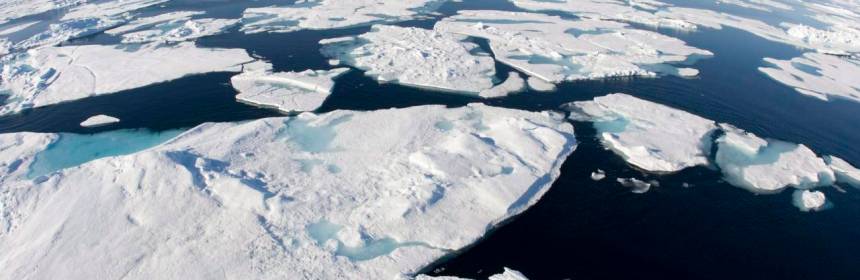
Photo: Ice floes in Baffin Bay above the Arctic Circle, The Canadian Press, Jonathan Hayward)(Credit: AP)


World’s largest marine reserve created off Hawaii

US President Barack Obama has expanded a national monument off Hawaii, creating the world’s largest marine reserve, the White House says.

His announcement on Friday quadruples in size a monument originally created by President George W Bush in 2006.

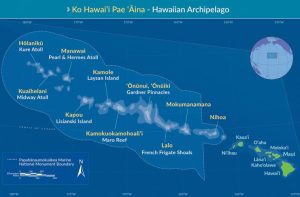
The Papahanaumokuakea Marine National Monument will now span 1.5m sq km (582,578 sq miles), more than twice the size of Texas.

The designation bans commercial fishing and any new mining.

The White House says the expansion is helping to protect more than 7,000 species and improves an ecosystem affected by ocean acidification and warming.

READ FULL ARTICLE AT:

WORLD’S LARGEST MARINE RESERVE CREATED OFF HAWAI

BBC News

27 August 2016

http://www.bbc.com/news/world-us-canada-37202045

papahanaumokuakea-map-759x500

Deep Sea Mining – The Ocean Could Be the New Gold Rush

Thousands of meters beneath the azure ocean waters in places like the South Pacific, down through a water column saturated with life and to the ocean floor carpeted in undiscovered ecosystems, machines the size of small buildings are poised to begin a campaign of wholesale destruction. I wish this assessment was hyperbole, but it is the reality we find ourselves in today.

After decades of being on the back burner owing to costs far outweighing benefits, deep sea mining is now emerging as a serious threat to the stability of ocean systems and processes that have yet to be understood well enough to sanction in good conscience their large-scale destruction.

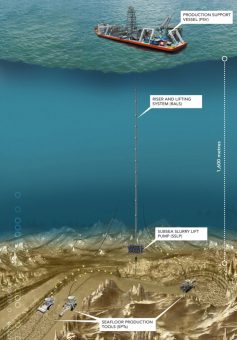
Critical to evaluating what is at stake are technologies needed to access the deep sea. The mining company, Nautilus Minerals, has invested heavily in mining machinery. However, resources needed for independent scientific assessment at those depths are essentially non-existent.

After decades of being on the back burner owing to costs far outweighing benefits, deep sea mining is now emerging as a serious threat to the stability of ocean systems and processes that have yet to be understood well enough to sanction in good conscience their large-scale destruction.

Critical to evaluating what is at stake are technologies needed to access the deep sea. The mining company, Nautilus Minerals, has invested heavily in mining machinery. However, resources needed for independent scientific assessment at those depths are essentially non-existent.

deep-sea-mining-the-layout-of-a-mining-operation  deep-sea-mining

The role of life in the deep sea relating to the carbon cycle is vaguely understood, and the influence of the microbial systems (only recently discovered) and the diverse ecosystems in the water column and sea bed have yet to be thoughtfully analyzed. If a doctor could only see the skin of a patient, or sample what is underneath with tiny probes, how could internal functions be understood?

The rationale for exploiting minerals in the deep sea is based on their perceived current monetary value. The living systems that will be destroyed are perceived to have no monetary value. Will decisions about use of the natural world continue to be based on the financial advantage for a small number of people despite risks to systems that underpin planetary stability – systems that support human survival?

READ FULL ARTICLE AT:

Deep Sea Mining: An Invisible Land Grab

by Sylvia Earle of Mission Blue

July 1, 2016

http://voices.nationalgeographic.com/2016/07/21/deep-sea-mining-an-invisible-land-grab/

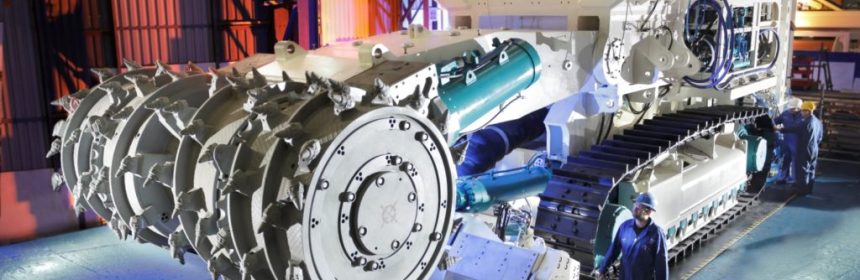
Featured photo: A deep sea mining machine

See also:

The Ocean Could Be the New Gold Rush

By Brian Clark Howard

July 13, 2016

http://news.nationalgeographic.com/2016/07/deep-sea-mining-five-facts/

The Great Barrier Reef: a catastrophe laid bare

Since 1982, just after mass bleachings were seen for the first time, the data shows that the average proportion of the Great Barrier Reef exposed to temperatures where bleaching or death is likely has increased from about 11% a year to about 27% a year.

Eakin says looking at that data revealed a clear trend that hadn’t been quantified before. “In seeing that what it immediately showed was that there was a real background pattern of increasing levels of thermal stress.”

Combined with other stressors hitting the reef, this is having a devastating impact. Over that period, half the coral cover on the Great Barrier Reef has been lost – and that’s before the mass bleaching this year is taken into account.

That data has limitations – it’s not direct bleaching, but stress inferred from temperature readings. And it lumps extreme levels of stress – like what is being seen around Lizard Island now – with anything that is expected to cause mortality.

Despite that, it reveals the way global warming is leading to more regular bleaching and mortality.

READ FULL ARTICLE AT:

The Great Barrier Reef: A Catastrophe Laid Bare

By Michael Slezak

7 June 2016

https://www.theguardian.com/environment/2016/jun/07/the-great-barrier-reef-a-catastrophe-laid-bare

Study finds only 1/3 of 5,000 fisheries assessed were fished at level allowing for recovery

A marine research ecologist at Dalhousie University says a new study is further proof we need to change the way we manage fisheries around the world.

“If you fish these stocks the exact same way you’re fishing them now and you keep that up, then indeed we will face in 30 years or so a world where according to this study almost 90 percent of stocks are depleted,” Boris Worm told CBC’s Mainstreet.

The study, published last week in the Proceedings of the National Academy of Sciences, shows while there are improvements in some areas of the world, the average state of fish stocks is poor and declining. Worm wrote a commentary on the study that will be published next month.

Of close to 5,000 fisheries assessed, only one third remained at a biomass target that supports maximum productivity. Two thirds have slipped below that threshold.

Even more concerning, Worm says, is the finding that only one third of stocks are currently fished at a level that would allow for recovery.

READ FULL ARTICLE:

FISHERIES STUDY SHOWS 2/3 OF FISH STOCKS DECLINING, RESEARCHER SAYS

By Bob Murphy, CBC NewsApr 05, 2016

http://www.cbc.ca/news/canada/nova-scotia/boris-worm-study-fisheries-management-1.3522301

Feature image: Photo credit Samsul Said/Rueters

« Older Entries Recent Entries »