Author Archives: Michelle Mech

We need our oceans to survive

The oceans regulate our climate and provide us with food, jobs, transportation, and over half of the oxygen that we need to breathe.

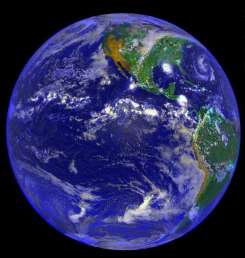
The Oceans cover 70% of Earth’s surface and make up 95% of all the space available to life.  They are our life support system without which there would be no life.

earth-from-space-courtesy-of-f-hasler-et-al-the-national-oceanic-and-atmospheric-administration-and-nasa

(Courtesy of F. Hasler, et al, the National Oceanic and Atmospheric Administration, and NASA)


The INTRODUCTION presentation provides a general comprehension of why our oceans are so important:

WHY OUR OCEANS ARE SO IMPORTANT – 170102

All presentation PowerPoint files in English are available under “Educational Material”.

30 PER CENT OF GLOBAL FISH CATCH IS UNREPORTED

Countries drastically underreport the number of fish caught worldwide, and the numbers obscure a significant decline in the total catch .

The new estimate, released today in Nature Communications, puts the annual global catch at roughly 109 million metric tons, about 30 per cent higher than the 77 million officially reported in 2010 by more than 200 countries and territories. This means that 32 million metric tons of fish goes unreported every year, more than the weight of the entire population of the United States.

Researchers led by the Sea Around Us, a research initiative at the University of British Columbia supported by The Pew Charitable Trusts, and Vulcan Inc., attribute the discrepancy to the fact that most countries focus their data collection efforts on industrial fishing and largely exclude difficult-to-track categories such as artisanal, subsistence, and illegal fishing, as well as discarded fish.

“The world is withdrawing from a joint bank account of fish without knowing what has been withdrawn or the remaining balance,” said UBC professor Daniel Pauly, a lead author of the study and principal investigator of the Sea Around Us. “Better estimating the amount we’re taking out can help ensure there is enough fish to sustain us in the future.”

overfishing-how-much-fish-are-we-really-catching

READ FULL ARTICLE:

SEA AROUND US STUDY FINDS 30 PERCENT OF GLOBAL FISHERIES CATCH IS UNREPORTED

http://www.seaaroundus.org/study-finds-30-per-cent-of-global-fish-catch-is-unreported/

A copy of the paper is available at: http://www.nature.com/ncomms/2016/160119/ncomms10244/full/ncomms10244.html

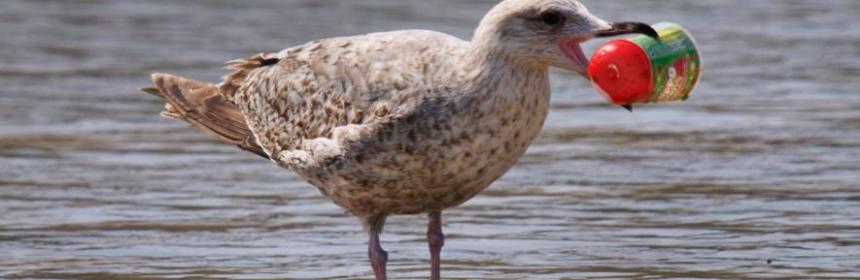
Nearly Every Seabird on Earth Is Eating Plastic

Plastic trash is found in 90 percent of seabirds. The rate is growing steadily as global production of plastics increases.

“That was shocking,” says Chris Wilcox, a research scientist with Australia’s Commonwealth Scientific and Industrial Research Organization and lead author of the study. “Essentially, the number of species and number of individuals within species that you find plastic in is going up fairly rapidly by a couple percent every year.”

The most disturbing finding, Wilcox says, is the link between the increasing rate of plastics manufacturing and the increasing rate at which the material is saturating seabirds.

“Global plastic production doubles every 11 years,” Wilcox says. “So in the next 11 years, we’ll make as much plastic as we’ve made since plastic was invented. Seabirds’ ingestion of plastic is tracking with that.”

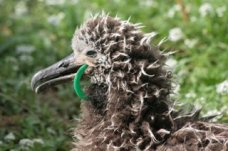
ingestion-black-footed-albatross-ingesting-plastic-3-photo-frans-lanting  ingestion-albatross-fledgling-chris-jordan  ingestion-bird-snacking-on-cigarette-butt-photo-credit-lea-anne-stacy-on-pinterst

Black-footed albatross ingesting plastic Photo: Frans Lanting; Albatross fledgling Photo: Chris Jordan; Bird ingesting cigarette butt

… are more prone to eating plastic because they fish by skimming their beaks across the top of the water, and inadvertently take in plastics floating on the surface. Petrels and shearwaters, which live on offshore islands and forage over large areas of sea, also contain large amounts of plastic in their stomachs.

Plastic found inside birds includes bags, bottle caps, synthetic fibers from clothing, and tiny rice-sized bits that have been broken down by the sun and waves.

The health effects of plastics on seabird populations have not been fully measured. But observational data collected is troubling enough, Wilcox says.

Sharp-edged plastic kills birds by punching holes in internal organs. Some seabirds eat so much plastic, there is little room left in their gut for food, which affects their body weight, jeopardizing their health. One bird examined by scientist Denise Hardesty had consumed 200 pieces of plastic.

“If you add more plastic to the gut, it will eventually make a difference,” Wilcox says. “The trend suggests that it’s going to keep increasing.”

A recent study found a 67 percent decline in seabird populations between 1950 and 2010.

READ FULL ARTICLE:

Nearly Every Seabird on Earth Is Eating Plastic

Extreme Arctic sea ice melt forces thousands of walruses ashore in Alaska

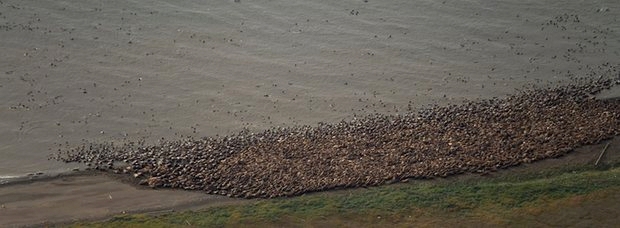
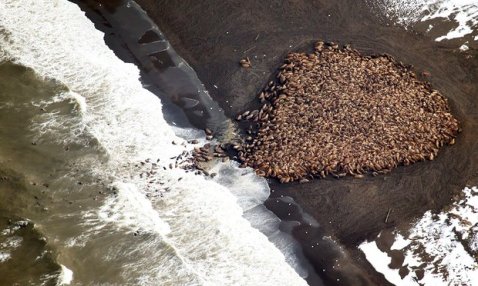
Aerial photograph of thousands of pacific walrus coming ashore near point lay on the north west arctic coast of Alaska Photo: Gary Braasch/Corbis

Survival of walruses threatened as they wash ashore on a remote barrier island.

The extreme loss of Arctic sea ice due to climate change is forcing thousands of walruses to crowd ashore on a remote barrier island off Alaska, and threatening their survival.

. . . Such landings, forced by the absence of sea ice on which to rest and feed, put the animals at risk of stampede in the limited space of the barrier island.

The animals are easily spooked by aircraft or onlookers, government scientists warned. Trampling deaths are one of the biggest natural risks.

Sea ice cover in the winter months fell to a new low this year because of climate change and abnormal weather patterns.

Some scientists believe the Arctic could be entirely ice-free in the summer months by the 2030s – with profound effects for local indigenous communities that rely on the ice, as well as wildlife that depend on extreme conditions.

Since 2000, the forced migration of walruses and their young to barrier islands such as Point Lay – known as a “haul out” – has become an increasingly regular occurrence, according to US government scientists.

. . . Last year, as many as 40,000 animals, mainly females and their young, were forced ashore. It was the biggest known haul-out of its kind in the US Arctic, according to government scientists. The Federal Aviation Authority re-routed flights and bush pilots were told to keep their distance to avoid a stampede.

Agency scientists said about 60 young walruses were killed because of crowding and stampedes.

                               climate-change-an-estimated-35000-walruses-are-pictured-are-pictured-hauled-out-on-a-beach-near-the-village-of-point-lay-alaska-700-miles-north-west-of-anchorage-in-this-september-2014-photogra

An estimated 35,000 walruses, hauled out on a beach near the village of Point Lay. Alaska, 700 miles north west of anchorage September, 2014.

READ FULL ARTICLE:

Extreme Arctic sea ice melt forces thousands of walruses ashore in Alaska

August 27, 2015

https://www.theguardian.com/environment/2015/aug/27/walruses-alaska-arctic-sea-ice-melt

 Featured image: Aerial photograph of thousands of pacific walrus coming ashore near point lay on the north west arctic coast of Alaska, Photo: Gary Braasch/Corbis

One in six of world’s species faces extinction due to climate change

One in six of the planet’s species will be lost forever to extinction if world leaders fail to take action on climate change, according to a new analysis.

Relatively small land masses in Australia and New Zealand mean that many species there will be unable to migrate to cope with rising temperatures, found the study, published in the journal Science on Thursday.

The study is the most comprehensive look yet at the impact of climate change on biodiversity loss, analysing 131 existing studies on the subject. The stresses on wildlife and their habitats from global warming is in addition to pressures such as deforestation, pollution and overfishing that have already seen the world lose half its animals in the past 40 years.

But even if governments do manage to hold global warming to 2C, one in 20 species (5.2%) still face extinction, the study found.

If manmade greenhouse gas emissions continue at their current record-breaking rate, leading to a temperature rise of more than 4C by the end of the century, 16% of species, or one in six, face extinction.

The study also emphasises that even for the animals and plants that avoid extinction, climate change could bring about substantial changes in their numbers and distribution.

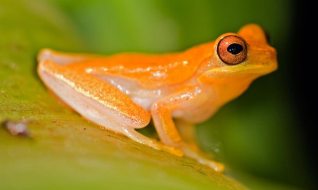
climate-change-the-golden-toad-was-once-native-to-the-cloud-forests-of-costa-rica-but-climate-change-aggravated-the-threats-from-deadly-chytrid-fungus-and-pollution-eventually-driving-the-species

The golden toad was once native to the cloud forests of Costa Rica, but climate change aggravated the threats from deadly chytrid fungus and pollution, eventually driving the species to extinction. Photograph: Alamy

SEE FULL ARTICLE AT:

One in six of world’s species faces extinction due to climate change – study

April, 2015

https://www.theguardian.com/environment/2015/apr/30/one-in-six-of-worlds-species-faces-extinction-due-to-climate-change-study

Featured Photo: A Bramble Cay Melomy, the first mammalian extinction due to climate change. (2016) Melomys used to inhabit a small island in the Great Barrier Reef. Rising sea levels destroyed 97% of their habitat and much of their food supply, and likely drowned many of them. 

Why This New Study On Arctic Permafrost Is So Scary

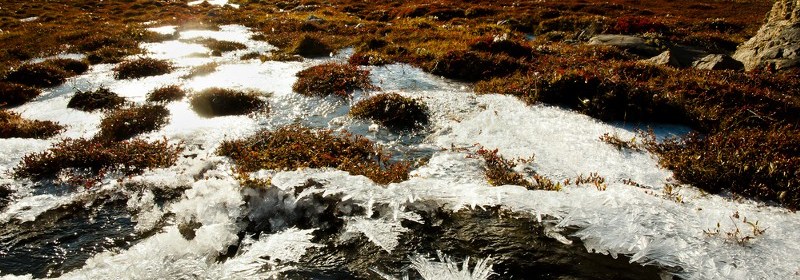
What makes this new research so important is that it adds to the urgency of stemming permafrost thaw. Because even without this new discovery of heat-producing microbes, estimates for carbon releases from thawing permafrost have been alarmingly large. According to the National Snow & Ice Data Center, there are about 1,700 gigatons of carbon currently frozen in permafrost — more than the total amount in the atmosphere now (Earth’s atmosphere contains about 850 gigatons of carbon, according to the Center).

Without considering microbes, the average estimate is that 120 gigatons of carbon will be released from thawing permafrost by 2100, which would raise the average global temperature 0.29 degrees. After 2100, if climate change worsens, total permafrost emissions roughly double. That’s confirmed by National Snow and Ice Data Center research scientist Kevin Schaefer’s research, which took the average of 15 peer-reviewed estimates of future carbon releases from thawing permafrost.

Schaefer, who was also one of the reviewers of the microbe study, told ThinkProgress that this is particularly alarming because emissions from permafrost are “completely irreversible.”

“These are permanent emissions,” he said. “Once you thaw out that material, there’s no way to put that organic matter back into the permafrost … you can’t re-freeze the permafrost.”

It’s also unclear whether the carbon that gets released once permafrost thaws will manifest itself as carbon dioxide or methane, which has a much greater impact on climate change — specifically, for each pound emitted compared with carbon dioxide, methane has a 20 times greater impact on atmospheric warming over a 100-year period, according to the Environmental Protection Agency. The New Scientist reports that if the Arctic gets warmer and drier, the microbes trapped within the permafrost can be expected to produce carbon dioxide. But if the environment gets warmer and wetter, the microbes that thrive will tend to produce methane.

The discovery of heat-producing microbes only threatens to add more uncertainty to permafrost emissions projections. Because even though we do know they can accelerate thaw, we don’t know how much.

“One of the biggest uncertainties is how much heat do the microbes generate as they eat the organic material,” Schaefer said. “It will accelerate thaw, but the question is how much. I don’t think that has been answered yet.”

So, that’s a lot of bad news when it comes to global climate change. But the good news, Schaefer said, is that accelerated thawing of Arctic permafrost can be prevented if warming is limited to a global average of 2 degrees Celsius.

READ FULL ARTICLE AT:

Why This New Study on Permafrost is So Scary

Emily Atkin

April 8, 2015

https://thinkprogress.org/why-this-new-study-on-arctic-permafrost-is-so-scary-d0b00d0b344e#.baycem1sw


Students in the Dominican Republic learn about plastic in our oceans.

Science students at Calansanz high school in Pueblo Bavaro.

P1240262-001P1240251-1

Calansanz students recycle their plastic and also used plastic waste to create artwork on the wall surrounding their school.

P1240240P1240271-1

P1240266-1P1240268

Ecoservices Dominicana utilize nereida educational material to teach students about plastic in the oceans as part of their Responsible Ecotourism Foundation.  Photo: Filipe Beltran, Anigeisy Cubilete R., Terry Wheat, Ecoservices Dominicana

P1240532

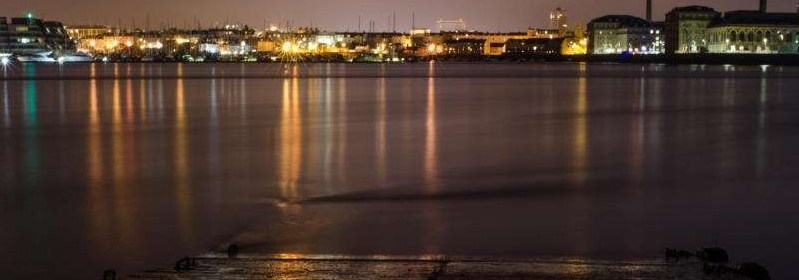
Coastal light pollution disturbs marine animals, new study shows

Marine ecosystems can be changed by night-time artificial lighting according to new research published in the Royal Society journal Biology Letters. The results indicate that light pollution from coastal communities, shipping and offshore infrastructure could be changing the composition of marine invertebrate communities.

Light is an important cue which guides the larvae of marine invertebrates as they search for suitable habitats to settle, grow and reproduce.

The researchers found that artificial light both suppressed and encouraged colonization by several species common to British coasts, including sea squirts and keel worms. These species are often referred to as fouling invertebrates as they adhere to man-made structures sometimes causing problems in marinas, dockyards and aquaculture facilities.

The results indicate that artificial light – increasingly used in coastal environments – could encourage unwanted fouling in marinas and dockyards, but also alter the abundances of these species in the wider environment where they can provide important ecosystem services.

Coral larvae, for example, use light to identify optimum habitats to settle in and grow into reef building adult structures. As tropical waters tend to be clearer than UK waters artificial light can penetrate deeper and disrupt a wider range of organisms.

Dr Tom Davies from the University of Exeter said: “We know that artificial light at night alters the behaviour of many marine animals but this is the first study to show that it can disrupt the development of ecological communities in the marine environment.

Dr Stuart Jenkins of the School of Ocean Sciences at Bangor University said: “This is an important first step in developing understanding of the way artificial light may be affecting marine coastal assemblages. Our research showed that levels of artificial light, commonly found in urbanised and developed coastal areas, can have important effects on the development of communities inhabiting hard surfaces in shallow water.”

Dr Katherine Griffith, also from the School of Ocean Sciences, added: “With urbanisation on the increase, many coastal areas around the globe will become vulnerable to the effects of artificial light pollution. Therefore, further research on how artificial light may disrupt marine communities is vital if we are to mitigate these impacts.”

READ FULL ARTICLE AT:

Coastal light pollution disturbs marine animals, new study shows

April 28,2015

https://phys.org/news/2015-04-coastal-pollution-disturbs-marine-animals.html

More information: ‘Nighttime lighting alters the composition of marine epifaunal communities’ will be published in the Royal Society journal Biology Lettersrsbl.royalsocietypublishing.org/lookup/doi/10.1098/rsbl.2015.0080

Journal reference: Biology Letters

Provided by: University of Exeter

Photo: Tom Davies, University of Exeter

See also: Artificial light may alter underwater ecosystems

By Kate Wheeling, April 28, 2015

http://www.sciencemag.org/news/2015/04/artificial-light-may-alter-underwater-ecosystems


« Older Entries Recent Entries »